

- Uncategorised
- Sunday, 01 March 2026
PET can be recycled thanks to a wide variety of methods: melt reprocessing, molecule break down (de-polymerisation), purification and re-polymerisation as well as energy recovery. Plastics recovery systems are prioritised according to their effectiveness in given situations. The table below illustrates which factors must be taken into consideration when selecting a process:
| Purity | Example of feedstock | Recovery process | General economics of the process | Process convenience |
|---|---|---|---|---|
| High | Refillable PET, one way PET | Re-melting | Satisfactory | Simple |
| Medium | Uncoated heavy gauge film fibrous waste, 100% generic coloured PET, coated PET | Partial glycolysis, glycolysis, methanolysis, recovery of TA and EG | Increasing costs | Increasing complexity |
| Low | Laminates coated thin gauge film | Energy | Well established costs | Relatively convenient |
Purity
Although the term purity depends on specific requirements, contamination is generally divided into three main categories: physical contamination (macroscopic level), physical contamination (microscopic level) and chemical contamination.
Macroscopic physical contamination of a PET batch includes easy-to-remove dirt, glass fragments, stones, grit, soil, paper, glues, product residues and other plastics like PVC and PE. On the other hand, ingrained soil caused by abrasion or grinding (due to baling, transport or handling in poor storage conditions) is difficult to dislodge and needs thorough filtration to ensure its removal.
Physical contamination at a microscopic level is more difficult to remove, especially if partially bound (like glues) or embedded by abrasion or impacting. Such impurities create “weak spots” and lead to production problems during reprocessing like, for example, excessive breaks in fibre spinning. The consequence is a loss of quality and productivity.
Chemical contamination occurs by adsorption of flavourings, essential oils, etc. used in the formulations of the container’s content. Chemical contamination can also be due to an emptied container being re-used for purposes other than the original one. Storing pesticides, household chemicals or motor and fuel oils in beverage containers leads to chemical contamination. Complete removal requires “desorption”, a slow process that entails a decrease in productivity. These occurrences are rare. For low risk applications, like non-food contact fibres, incidental product contamination is quite insignificant.
Mechanical Recycling
Mechanical recycling of PET bottles requires washing and grinding of recovered material. The resulting flakes are then either processed as such or are first blended with virgin polymer.
The degree of purity of recovered material is of paramount importance in the mechanical recycling process. Indeed, very small quantities of PVC can cause material degradation and, during reprocessing, can even damage equipment.
The acceptable PVC level in a PET stream is a mere 0.25%. Nowadays, automated, sophisticated bottle sorting equipment allows excellent separation of PET from other plastics.
Chemical Recycling
Chemical recycling is another established method for recovering reclaimed post-consumer waste. However, with equipment costs being high, it requires large turnovers to be economically viable.
The various chemical recycling techniques are: glycolysis, methanolysis, hydrolysis, saponification and pyrolysis. The selection of the appropriate process depends on the quality of the reclaimed input material. For example, glycolysis and methanolysis are unable to remove colours added to PET feedstreams during their original formulation. These therefore require additional purification.
Glycolysis
Recovered PET is made to react (under pressure at 200°C) with excess ethylene glycol. This reverses the polymerisation reaction to give bishydroxyethylterephthalate (BHET) and short chain polymers with just a few repeat units. The BHET is then purified under pressure by melt filtration (to remove physical impurities), then it is treated with carbon (to remove chemical impurities).
Methanolysis
PET is treated (under pressure and at 200°C) with methanol. This results in de-polymerisation of the molecule. The resulting products are dimethyl terephthalate (DMT) and ethylene glycol (EG). DMT is purified through distillation and crystallisation to give a high quality intermediate that can be used to make new PET. Once refined, EG can be used for a variety of applications including antifreeze and for the PET production.
Hydrolysis
PET is hydrolysed through a water treatment and an acid or caustic soda r-treatment to produce terephthalic acid (TA) and ethylene glycol. These require purification before their re-use. Commercial hydrolysis is less established than glycolysis and methanolysis.
Saponification
PET is hydrolysed by alkali treatment. Two processes have been developed for commercialisation so far: Recopet (France) and Unpet (USA). Recopet is a multistage process in which PET flakes are saponified and filtered. The dyes are extracted before the extraction of PTA precipitates, sodium sulphate and EG. The Unpet process produces EG and disodium terephthalate. These are then heated in order for EG to evaporate and reduce organic impurities to carbon dioxide and water. Disodium terephthalate is obtained by filtration from aqueous solution.
Pyrolysis
Mixed-stream thermoset polymers are broken down (in the absence of oxygen and at high temperatures) to yield a mixture of hydrocarbons similar to naphtha. This "chemical soup" is used as fuel or as feedstock for the petrochemical industry.
- Uncategorised
- Tuesday, 24 February 2026
PETCORE EUROPE is the association representing the complete PET value chain in Europe

Address: Avenue de Broqueville 12, 1150 Brussels, Belgium

Phone number: +32 (0) 2 315 24 88
E-mail address: This email address is being protected from spambots. You need JavaScript enabled to view it.

Web address: www.petcore-europe.org
- Uncategorised
- Saturday, 22 November 2025
Petcore Europe / Members Map
PETCORE EUROPE - PET value chain. You can find more about our members on the map below.
- Uncategorised
- Thursday, 06 November 2025
CHRISTIAN CREPET
ERIC WESTERHOFF

EVA MARIA KAMP
FREDERIC FAVRE
GAETANO DEDUAL
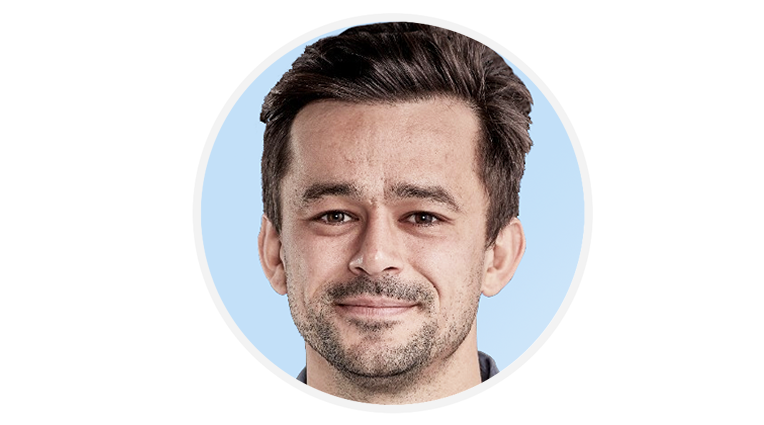
JOSSE KUNST
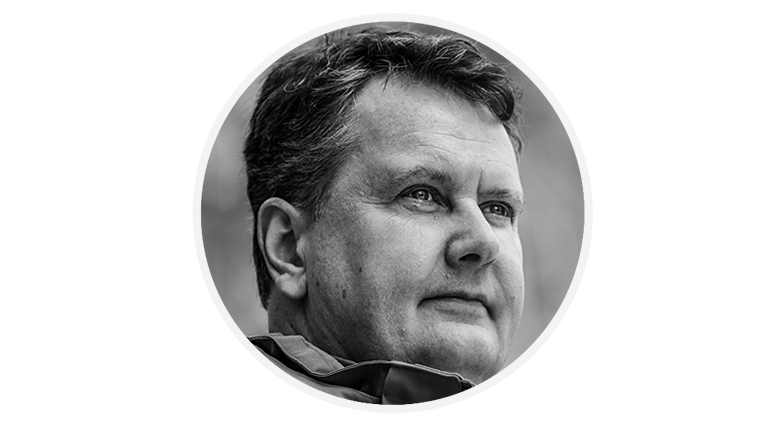
LOUISA HOYES
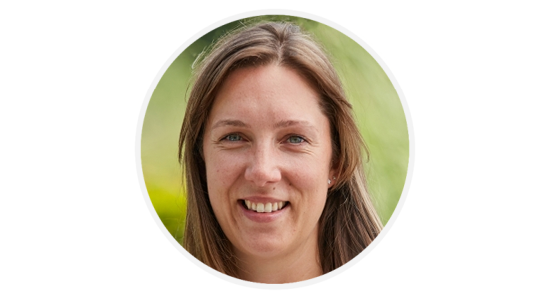
MAURIZIO CRIPPA


- Uncategorised
- Friday, 17 October 2025
UPCOMING MEETINGS & EVENTS
5 - 6th February 2026 – Annual Conference 2026, Rome, physical event
31st March 2026, 3:00-4:30 PM CET – Online Webinar “PETCORE EUROPE highlights: Recycle the One PET campaign & Advocacy WG updates”
16th April 2026 at 2:00 PM CET – Innovation Papers Online Webinar
5-6th May 2026 – PRSE 2026, Amsterdam
18-19th June 2026 – Thermoforms Conference 2026, Valencia, physical event.
17th September – Roadshow 2026, Budapest
- Uncategorised
- Tuesday, 09 April 2024
- Uncategorised
- Thursday, 08 February 2024
Make sure you enter the (*) required information where indicated.
- Uncategorised
- Monday, 25 March 2019
For the PET resin producers association:
- Antonello Ciotti (Dow ) representing PET Europe – President
- Colm Jordan (Indorama) representing PET Europe
- Jorge Villanueva (Alpek) representing PET Europe
Ambassador:
- Christian Crepet (Petcore Europe)
For the PET converter associations:
- Marc de Voogd (Alpla) representing Forum PET
For the PET recyclers associations:
- Casper van den Dungen (Poly Recycling) representing PRE – Vice President
- Herbert Snell (MultiPet) representing PRE
For the member companies:
- Christoph Wöss – Erema (Machinery)
- Ana Fernandez – Klöckner Pentaplast (Sheets)
- John McClelland – Avient – Treasurer (Masterbatch)
- Gian de Belder – P&G (Brand Owner)
- Sabine Zariatti- Suez (Waste management)
- Antoon Spiessens – Coca-Cola (Brand Owner)
- Bernhard Heisel - Schwarz Gruppe (Retailers)
- Uncategorised
- Thursday, 13 September 2018
For the PET resin producers association:
- Paola Arlotti (Equipolymers) representing CPME – President
- Santiago Rotstein (Plastiverd) representing CPME
- Stephen Short (Indorama) representing CPME
For the PET converter associations:
- Raphael Jaumotte (Plastipak) representing EuPC – Treasurer
- Marc De Voogd (Alpla) representing Forum PET Europe
- Joachim Eckstein representing EuPET
For the PET recyclers association:
- Casper van den Dungen (Poly Recycling) representing PRE – Vice President
- Herbert Snell (MultiPet) representing PRE
For the member companies:
- Francoise Poulat – Danone
- Christoph Wöss – Erema
- Carsten Heldmann – Klöckner Pentaplast
- Zach Crawford – PolyOne / ColorMatrix
- Gian de Belder – P&G
- Christine Leveque – Suez
Honorary / founding member:
- Marcel de Botton – Logoplaste